Mali’s troops needed air support. Then JNIM targeted the airfield
The disaster at Dioura and shelling at Sévaré expose a harder test for Mali’s Russian partnership: keeping isolated troops within reach of help.
Soldiers at Dioura lacked air support when jihadists attacked their camp, a security source told AFP. Days later, a resident in Sévaré reported shelling at an airport that houses Mali’s military aircraft and drones.
That sequence raises a question for Mali’s commanders and their Russian partners: how do you rescue an isolated garrison while protecting the aircraft and crews you need to reach it?
The available reporting does not establish that the attackers disabled Sévaré’s air operations. It does show why the consequences of this month’s fighting could extend beyond the troops killed at a single camp.

The missing support at Dioura
AFP reported on Sept. 18 that at least 100 Malian soldiers and five Russian Africa Corps personnel died in the Sept. 10 assault on Dioura in central Mali. It cited military, security and local sources.
The security source said many soldiers were on their first field deployment and lacked air support. A local official said the army had abandoned the camp and the attackers had stripped its weapons. These remain attributed accounts, not findings from an independent inspection.
The Malian army offered a different emphasis. In a statement reported by The Associated Press on Sept. 19, it described an air-ground operation to evacuate two companies and acknowledged military deaths without publishing a toll. JNIM, the al-Qaida affiliate that claimed the attack, said it killed 150 soldiers and captured 93. AP could not verify those figures.
Evacuating survivors and holding a position are separate military outcomes. The army’s account describes an extraction; it does not establish that the garrison resumed its previous role. Nor does the existence of an evacuation operation settle whether troops received adequate support during the initial assault.
Pressure on the airfield
JNIM’s claim, issued Sept. 20, covered attacks at Sévaré and Konna. Reuters reported that the group claimed 33 deaths. But Brant (@BrantPhilip_) and Wamaps, in their Sept. 21 accounts of the statement, described 33 people killed or wounded. That discrepancy remains unresolved. The figure should not be treated as a verified death toll, or as a count for Sévaré alone.
A Sévaré resident told Reuters on Sept. 21 that the airport had endured six successive nights of shelling. Two residents of Konna, about 55 kilometres away, described fighters appearing to surround its military camp. Reuters also obtained estimates of 120 and 130 Malian military deaths at Dioura from separate sources.
Those reports support a picture of pressure at several positions. They do not prove a single coordinated plan behind the September attacks. Neither do they establish that JNIM captured Sévaré, destroyed specific helicopters or cut the north off from resupply.
For commanders, the operational concern starts before an airport falls. If shelling forces crews to interrupt maintenance, shelter aircraft or postpone departures, troops elsewhere may wait longer for assistance. Establishing whether that happened at Sévaré would require evidence of flight activity, damage and service interruptions that the reports reviewed here do not supply.
What the images add
Brant’s Sept. 21 post carries aerial images circulated with the claim and describes JNIM saying it targeted four Turkish-built drones and helicopters. A bright flash is visible in the reproduced frame. The image alone cannot identify a destroyed aircraft or establish how long the airfield stopped functioning.
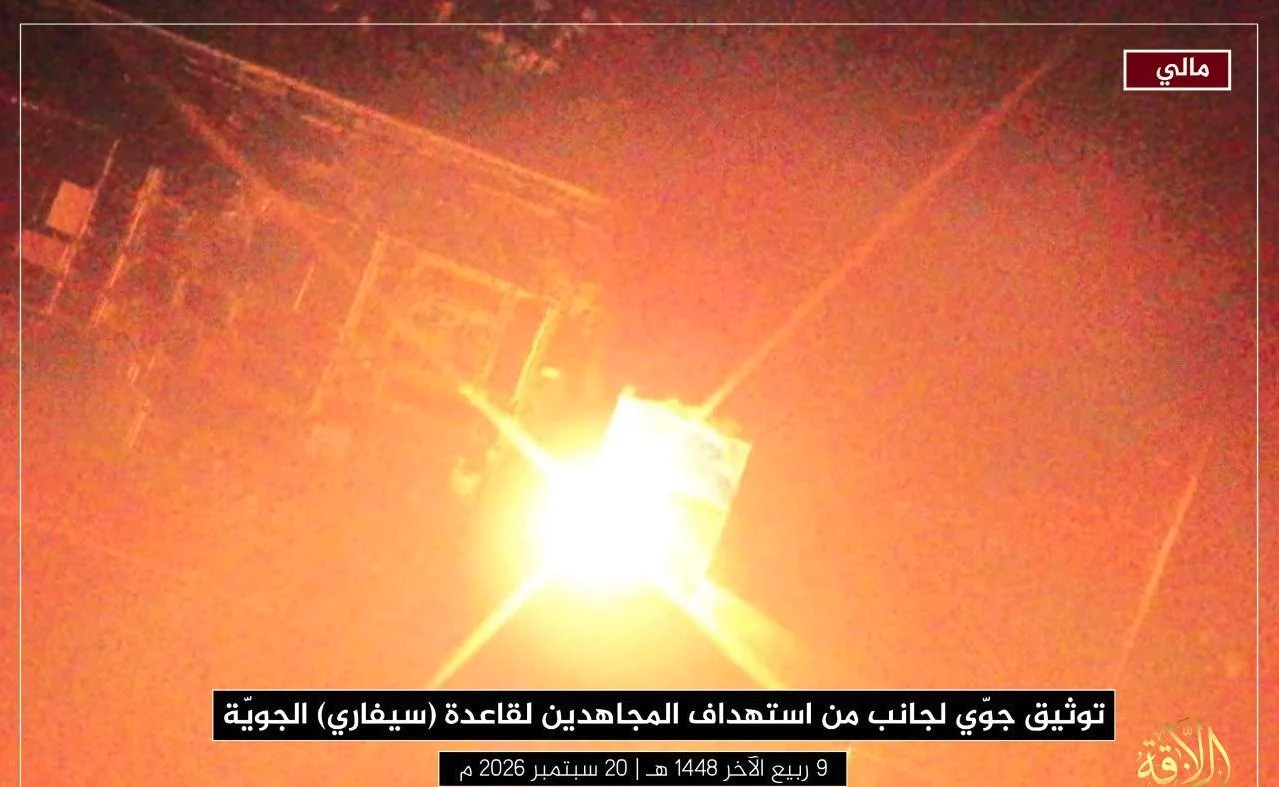
View Brant’s Sept. 21 source post and attached imagery on X.
The accounts also changed over time. Brant’s Sept. 15 post described reports of suicide drones. Wamaps’ later account of JNIM’s statement instead cited mortar and SPG-9 fire, and noted that the statement did not mention suicide drones. Those descriptions cannot establish a single attack method without further evidence.
A separate Sept. 17 Wamaps post presents a short imagery-comparison video, crediting Zaryon OSINT (@zarGEOINT). Wamaps interprets dark marks in an aircraft parking area as possible burn traces. Readers can inspect that interpretation in the source video below; Sahel Futures has not obtained the underlying dated imagery to verify the comparison.
Watch Wamaps’ Sept. 17 imagery-comparison video, credited to Zaryon OSINT, on X.
These posts offer leads and material to examine. Several accounts repeating the same statement or sharing the same images do not constitute separate confirmations of the losses.
A Russian partnership under strain
In its April assessment of coordinated attacks across Mali, the Africa Center for Strategic Studies identified Sévaré and Mopti among the locations linking northern conflict zones with population and economic centres in the south. It argued that JNIM increasingly sought to restrict movement and supplies around major settlements.
The centre also identified stretched military supply lines and limited rapid-response capacity as weaknesses. September’s reporting warrants examining those problems again, without assuming that the same commanders directed each attack or that every threatened position faces the same outcome.
For Russia, Dioura poses a concrete test of its partnership with Bamako. According to AFP’s sources, Russian personnel died alongside Malian soldiers at a camp where troops lacked the support they needed. Russian participation did not prevent that reported disaster.
Calling this the failure of a Russian “security guarantee” implies a defined commitment that the evidence here does not establish. The narrower judgment is damaging enough: Mali’s foreign military partnership has not demonstrated that it can keep these exposed troops protected and reinforced.
Assigning responsibility requires more than counting Russian casualties. Command arrangements, available aircraft, intelligence and response times would help establish whether commanders failed to act, lacked the means or faced conditions that prevented intervention. None of those explanations should become a fact through repetition.
What would show recovery?
Bamako could demonstrate recovery through a functioning garrison at Dioura, sustained operations at Sévaré and reliable access to threatened positions. Announcing retaliatory strikes answers a different question from showing that troops can remain deployed and receive supplies.
The evidence to watch is practical: dated imagery showing whether the camp is occupied, independently corroborated aircraft losses or repairs, and documented movements into and out of the affected bases. Images of a flag or a brief patrol would offer much less proof of lasting control.
For the soldiers sent to replace those lost at Dioura, the unresolved issue is whether reinforcements and air support will reach them when the next attack begins.
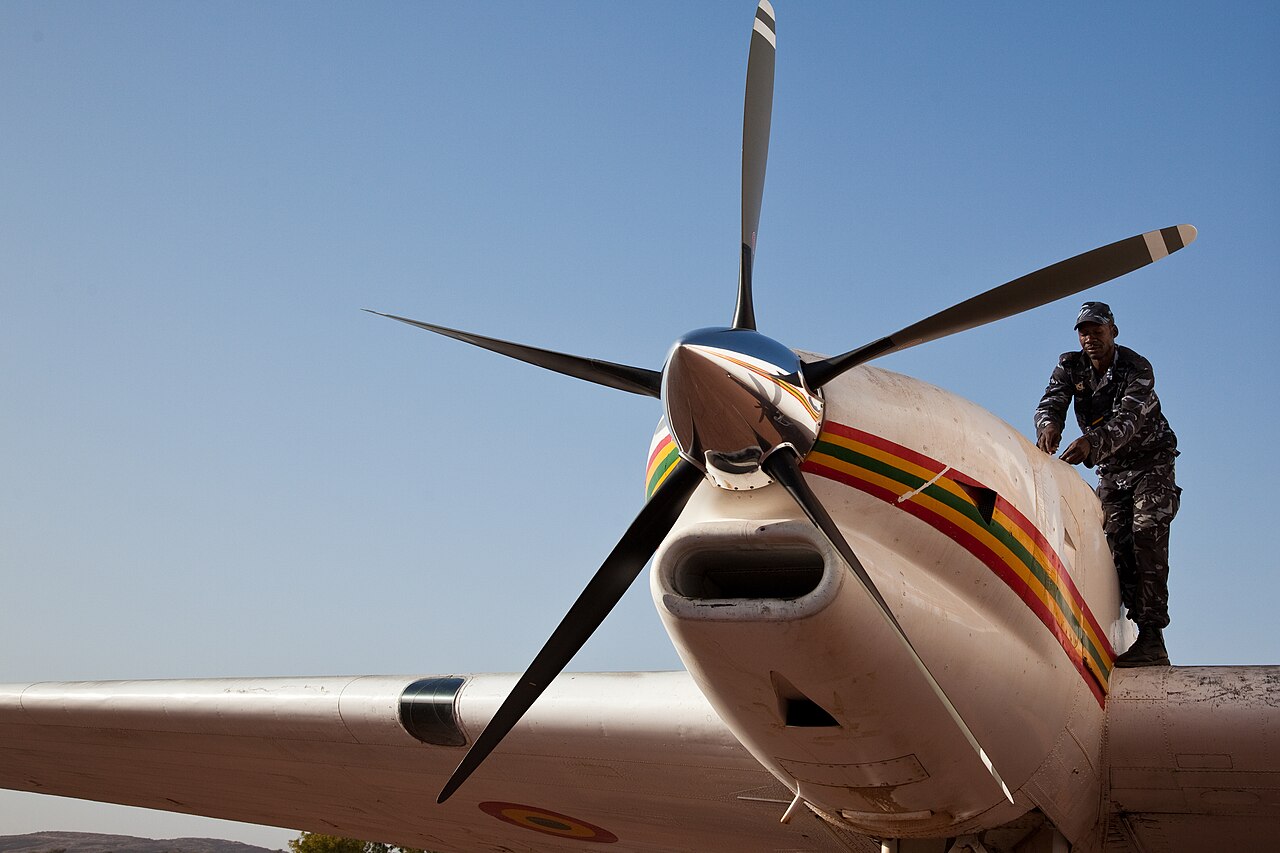
Reporting note: Analysis based on linked AFP, AP and Reuters reporting, the Africa Center assessment, and original X posts by Brant and Wamaps, reviewed Sept. 23, 2026. Wamaps credits its imagery video to Zaryon OSINT. Sahel Futures conducted no field interviews, did not authenticate combat imagery, and has not verified aircraft losses. The accounts disagree over whether the figure of 33 refers to deaths or combined casualties. The 2012 archive photograph provides context only.
METHOD
Sources and responsibility
Four reporting/analysis sources plus original X posts from Brant and Wamaps; imagery-video credit to Zaryon OSINT. Archive photo: U.S. Army, 2012. Source posts reviewed, combat imagery not independently authenticated.